
It is important you take precautions when leaving your bike unattended either at home or away.
So let's talk about different types of lock and the different levels of security they offer.
The rule of thumb to remember with locks is that, generally, the heavier and more expensive it is, the higher level of security it will have.

|

|

|

|
Sold Secure is an independent testing house that manufacturers can submit their security products for testing and accreditation.
They test locks using one of our four levels of theft resistance. These specifications vary in the type of attack, tools used, and time spent during the attack. We recommend any lock you buy bears the Sold Secure badge.
Bronze
Offering theft resistance against a basic tool list (aimed at preventing opportunist crime)
Silver
Offering theft resistance against an enhanced tool list (aimed at preventing more determined attack)
Gold
Offering theft resistance against a dedicated tool list (aimed at preventing dedicated attacks)
Diamond
The highest level of theft resistance including use of specialist tools (aimed at preventing the most destructive attacks that could include angle grinders)
These locks are generally the most secure. They feature a D-shaped design which allows you to secure your bike to something immovable like a stand, fence or rack. The size of the D can vary and may sometimes come with an additional cable although be aware the security rating of the lock will not cover the cable. More expensive versions often have the highest security rating They usually have thicker, hardened steel arms to resist angle grinders and an anti-pick lock. Some also come with built in alarms that will go off when tampered with and a bracket so you can attach it to your bike when not in use.

A folding lock offers the security of some D-Locks and the portability of a cable lock. A series of hardened steel plates unfold from a neat pouch to give you upto a 1 metre circumference lock that can secure your bike around the frame to a secure object like a stand. The steel plates are designed resist attempted theft by grinder or bolt-cutter and they come supplied with high security keys. The locks fold back down to a very small footprint and can be easily carried in a bag or on the bike with it's own bracket.


These are probably the least secure locks but most convenient and lightest to carry. They come in various lengths, cable thicknesses and colours and feature either a coded barrel lock or keys. The raw cable is covered in plastic to protect your frame paint and is usually supplied coiled up to achieve a smaller footprint. The more expensive and heavier cable locks come with a bracket so you can carry it on your bike when not is use.
The lightest cable locks (sometimes called cafe locks) offer the least security and are only designed as a deterrent against an opportunist thief rather than outright theft prevention. They are super convenient though if you are just popping into a shop or cafe and don't want to lug a heavy lock around all the time.

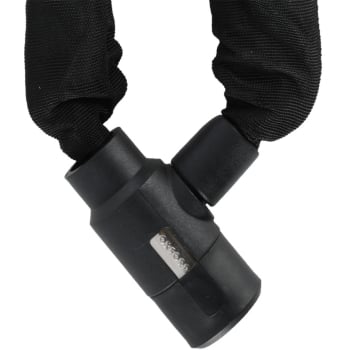
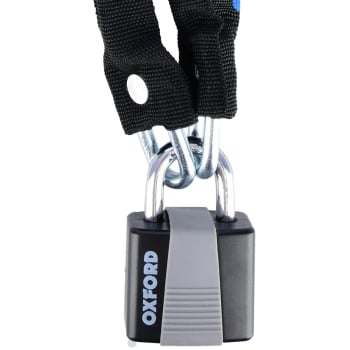
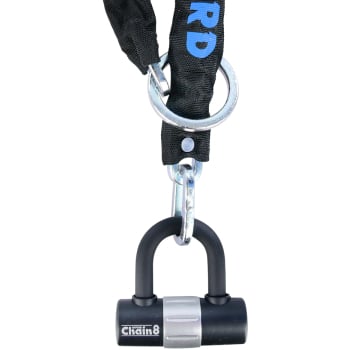
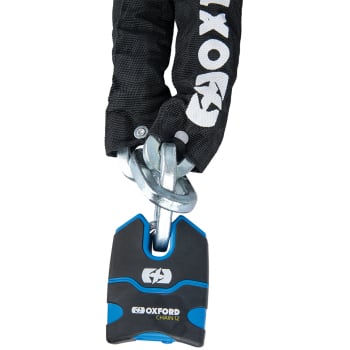
These are the heaviest of locks and are usually kept at home to secure a bike in a shed or a garage often in conjunction with some kind of anchor (see below). The locks feature a long, material covered chain to protect your paintwork and the lock is either a coded barrel, a keyed lock or a separate padlock. Very popular with motorcyclists to secure their bikes.

These are usually secured to the ground or suitable walls in sheds, garages or workplaces and offer an anchor point for any lock so your bike cannot be picked up and taken away. Some are insurance company approved.

These are keyed locks permanently attached to the rear stays of the bike frame around the back wheel and when locked send a bar through the rear wheel to immobilize it. Some also allow the attachment of a chain or cable to to secure the bike to something. Dependant on the model, some bikes come with them pre-fitted, some can have them fitted retrospectively. They are a useful way to carry a lock on a bike but are not the most secure. Ideal for shopping and popping into pubs and cafes.